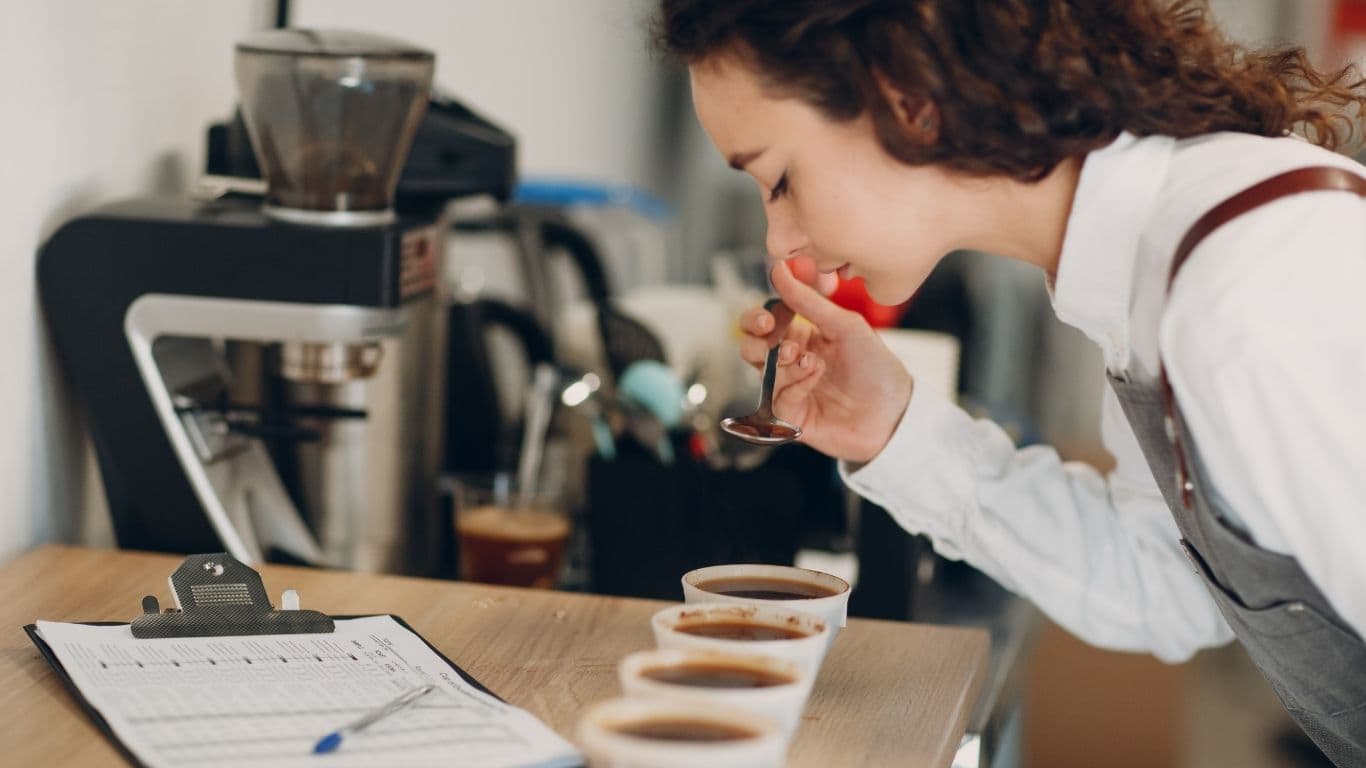
Taste testing is often seen as a simple exercise where people sample a few products, pick a favorite, and brands record the results. In reality, it is a precise scientific process built on decades of sensory research and consumer psychology. Food and beverage companies use taste testing to translate human perception into measurable data that guides everything from formulation to marketing.
Behind every bite or sip that consumers enjoy is a system of structured experiments, controlled environments, and statistical analysis. These methods reveal how consumers respond to flavor, texture, aroma, and mouthfeel, and why those reactions matter for brand success.
Taste testing is a scientifically grounded research method that gives food and beverage brands a strategic advantage by transforming consumer preferences into actionable product insights that support formulation, differentiation, and market success. It bridges the gap between what consumers say they like and what they actually choose, helping brands turn sensory feedback into smarter and more successful product launches.
Why Taste Testing is More Than Just a Chance to Snack
A single product’s success often comes down to taste. Studies in consumer behavior consistently show that flavor is the most influential factor in repeat purchases. For food and beverage companies, even small differences in sweetness, saltiness, or mouthfeel can determine whether a product thrives or disappears from store shelves.
Taste testing turns what might seem like a subjective experience into an objective process. Rooted in the field of sensory science, taste testing uses controlled testing conditions and statistical analysis to measure how consumers perceive and respond to flavor, aroma, and texture. These studies rely on trained facilitators, consistent sampling procedures, and precise data collection methods to separate genuine consumer preference from random variation or bias.
For brands, this type of structured consumer feedback can be the difference between a successful launch and a costly reformulation. At Eastcoast Research, our taste testing services apply this same scientific precision to help clients refine flavors and build products that stand out in competitive markets.
What a Taste Test is, and What it Isn’t
Taste testing is often misunderstood as a casual survey of opinions. In professional research, it’s a controlled experiment designed to evaluate how consumers perceive and prefer specific food or beverage formulations.
Different formats are used depending on research goals:
- Blind vs. Branded Tests: Blind tests remove brand influence to isolate sensory reactions, while branded tests explore how recognition or loyalty affects perception.
- Monadic vs. Comparative Tests: Monadic tests measure reactions to one sample at a time, while comparative tests pit multiple samples against each other to reveal preferences.
- Central Location Tests (CLTs) vs. Home Use Tests (HUTs): CLTs provide laboratory consistency, while HUTs evaluate products in real-world conditions.
Each method serves a distinct purpose. A central location test might be used early in development to fine-tune ingredients, while a home use test can validate how a product performs in everyday environments.
Unlike informal taste panels or opinion polls, professional sensory tests rely on standardized methodologies and statistical validation. As discussed in Approaching 100 Years of Sensory and Consumer Science (Meiselman et al., 2022), consistent testing environments, controlled presentation conditions, and careful management of consumer response are essential to ensure valid results.
The Science Behind Taste Testing
Behind every successful taste test is a framework grounded in sensory and consumer science. Researchers measure human responses to a range of sensory dimensions such as appearance, aroma, flavor, texture, and aftertaste to understand what truly drives liking.
Hedonic scaling, most often in the form of a nine-point “like to dislike” scale, remains a cornerstone of taste testing. This simple but powerful tool transforms emotional reactions into quantifiable data. Combined with advanced statistical modeling, it allows researchers to identify patterns across demographics and define preference clusters, or groups of consumers who share similar flavor expectations.
Modern testing is also designed to reduce bias. Samples are coded and served in random order, and neutral environments and palate cleansers are used between tastings. Some studies even use double-blind procedures so that neither the participant nor the facilitator knows which product is being evaluated.
The field continues to evolve, and researchers are increasingly exploring emotion mapping and subconscious response tracking to better predict real-world behavior (Meiselman et al., 2022). The goal is not only to identify which product people prefer, but also to understand why that preference develops and how it connects to purchase intent.
Why Brands Rely on Taste Tests to Win Market Share
Taste testing isn’t just about flavor—it’s about strategy. For food and beverage companies, consumer data from sensory research informs every stage of product development and positioning.
1. Product Development
Taste tests help manufacturers identify the ideal balance of ingredients, sweetness, or spice before production begins. For example, a beverage company might test three different formulations to determine which blend best aligns with target-market preferences. Adjustments can be made long before the product hits the shelf, saving both time and cost.
2. Benchmarking Against Competitors
Blind taste tests often reveal where a brand stands in comparison to others. Understanding whether consumers prefer your product (or why they don’t) provides a competitive advantage.
3. Regional and Cultural Insights
What appeals to one region may not resonate elsewhere. Taste testing helps brands uncover these variations, ensuring that flavor profiles are tailored to specific audiences rather than taking a one-size-fits-all approach.
4. Marketing Claims and Validation
Taste tests support the credibility of statements like “preferred 2 to 1” or “voted best flavor.” Such claims require statistically validated consumer data to meet regulatory standards and build consumer trust.
Taste Testing in Action: Eastcoast Research’s Approach
At Eastcoast Research, we have refined the art and science of sensory testing for decades. Our methodology goes beyond simple sampling to deliver actionable insight for food and beverage clients.
Each project begins with targeted participant recruitment, ensuring the sample reflects the intended market. Factors such as age, region, diet, and lifestyle are considered to match the ideal consumer profile.
Testing can take place across multiple formats:
- In-facility central location testing for controlled precision
- In-home testing for real-world performance
- Hybrid and virtual formats for greater flexibility
During testing, trained facilitators administer structured questionnaires, hedonic scales, and qualitative prompts that capture both numeric data and open-ended insights. Once data is collected, Eastcoast Research’s analysts apply statistical models to uncover key preference trends, helping clients identify what drives satisfaction and where improvements are needed.
The result is a data-backed roadmap for product optimization, blending quantitative rigor with qualitative context.
What Makes a Taste Test Successful?
The most valuable taste tests are the ones that generate clear, reliable direction. Success depends on a few key principles:
- Defined Objectives: Determine whether you are testing for preference, acceptability, or perceptible difference.
- Representative Sampling: Participants should reflect real consumers, not convenience samples.
- Controlled Environment: Variables like temperature, lighting, and timing are managed to ensure accuracy.
- Unbiased Facilitation: Trained moderators prevent suggestion or influence.
- Speed to Insight: Quick data turnaround supports faster decision-making.
Pilot tests are often used to identify flaws in setup or question design before a full rollout. This small step can make the difference between ambiguous results and actionable insight.
Beyond the Lab: Real-World Validation
Even the most precise lab test only captures part of the picture. Real-world validation is where theory meets practice.
Many brands follow up controlled testing with home use tests (HUTs) or intercept surveys to see how products perform in daily routines. These tests capture factors that the lab can’t, such as packaging convenience, consumption context, and emotional response.
For example, a snack that performs well in a central location test might be less appealing when consumed on-the-go, revealing an opportunity to adjust size or flavor intensity. Combining lab precision with in-field observation gives brands a holistic view of performance and purchase behavior.
Flavor as a Predictor of Success
For food and beverage brands, flavor can determine whether a product succeeds or fails. When a product’s taste meets consumer expectations, it drives loyalty, repeat purchases, and positive word of mouth.
Few stories show this more clearly than the launch of New Coke. In 1985, Coca-Cola reformulated its classic beverage to compete with Pepsi’s sweeter profile. In blind taste tests, the new formula outperformed both Pepsi and the original Coke. Within weeks of the launch, however, consumer backlash was intense. People were not rejecting the flavor itself. They were rejecting the change. The brand had underestimated the emotional connection consumers felt toward the original formula.
The Coca-Cola Company later acknowledged that while test data showed a technical improvement, it overlooked the role of brand trust. The same lesson applies today. Consumer testing must measure both sensory satisfaction and emotional expectation.
This example shows why modern sensory testing looks at more than flavor chemistry. It also explores cultural meaning and emotional connection. Brands that unite scientific precision with emotional insight are better equipped to succeed in the marketplace.
Find Your Flavor Fit
Taste testing is where data meets delight. It helps brands uncover what consumers truly want and create products that connect on both sensory and emotional levels.
When a product’s flavor, texture, and aroma align with consumer expectations, it becomes more than something people enjoy. It becomes something they trust.
At Eastcoast Research, we partner with brands across industries to design, execute, and analyze taste tests that lead to measurable success. Whether refining an existing formula or testing a new concept, our sensory research turns consumer feedback into insight and transforms flavor into strategy. Businesses ready to discover their next winning product can request a bid and start building flavors that resonate with consumers.
Sources
Ghose, S., & Lowengart, O. (2001). Taste tests: Impacts of consumer perceptions and preferences on brand positioning strategies. Journal of Targeting, Measurement and Analysis for Marketing, 10, 26–41. https://doi.org/10.1057/palgrave.jt.5740031
Meiselman, H. L., Jaeger, S. R., Carr, B. T., & Churchill, A. (2022). Approaching 100 years of sensory and consumer science: Developments and ongoing issues. Food Quality and Preference, 100, 104614. https://doi.org/10.1016/j.foodqual.2022.104614
National Research Council (US) Panel on Sensory Evaluation. (2010). Sensory evaluation. In The Role of Human Factors in Home Health Care. National Academies Press (US). Retrieved from https://www.ncbi.nlm.nih.gov/books/NBK279408/
Peaslee Levine, M., & Levine, D. M. (2023). A Coke by Any Other Name: What New Coke Can Teach about Having Trust, Losing Trust, and Gaining It Back Again. IntechOpen. https://doi.org/10.5772/intechopen.108982
The Coca-Cola Company. (2020). New Coke: The most memorable marketing blunder ever. Retrieved from https://www.coca-colacompany.com/about-us/history/new-coke-the-most-memorable-marketing-blunder-ever